Published: May 09, 2025
Green AI in Edge computing: Leveraging localised intelligence for sustainability
Executive summary
This article delves into the potential of Edge computing in achieving green AI. By processing AI tasks on local devices and minimising the reliance on data centre resources, Edge computing can provide a more energy-efficient approach to AI applications, particularly those necessitating real-time responses. This article will discuss the current state of developments in Edge AI and Edge computing and highlight specific challenges such as power consumption, battery life constraints, and maintaining performance and accuracy while prioritising energy efficiency. Furthermore, the article will emphasise the critical role of Edge computing in green AI success and explore possible resolutions to overcome the identified challenges.
Introduction
Green AI has emerged as a critical area of research and development in recent years, driven by the rapid growth of artificial intelligence (AI) and its increasing environmental impact. As AI systems become more complex and resource-intensive, their energy consumption and carbon footprints have become a growing concern. Green AI aims to address these concerns through the development of sustainable and energy-efficient AI systems that minimise environmental impact without compromising performance and accuracy. Green AI is not just about reducing the environmental impact of AI systems; it's also about making AI systems more efficient, effective, and cost-effective. The importance of green AI cannot be overstated, as it has the potential to revolutionise the way AI is designed, implemented, and deployed, and to ensure that the benefits of AI can be harnessed in an environmentally responsible manner.
The increasing demand for AI applications across multiple domains, such as IoT devices and smart systems, has led to the need for localised intelligence that can process data and make decisions in real time. This is where Edge computing comes into play. Edge computing is a distributed computing paradigm that brings computation and data storage capabilities closer to the sources of data and reduces the need for data to be transmitted to centralised data centres for processing.
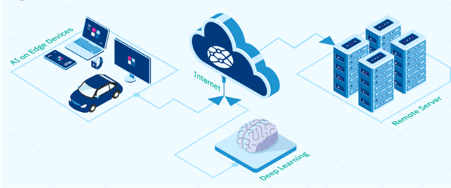
In contrast to the cloud computing paradigm, where collected data is fully transmitted to a central server before being analysed and used, edge computing allows for these tasks to be completed on or close to the devices. Decentralised computing itself is not a new paradigm and was prevalent before the advent of the centralised cloud computing paradigm. But it has become more important as data volumes, traffic, analysis, and storage requirements have increased drastically, while bandwidth as well as security remain limiting factors. By processing AI tasks on local devices, and minimising the reliance on data centre resources, Edge computing enables a more energy-efficient approach to AI applications, particularly those necessitating real-time responses. This makes Edge computing a promising solution for achieving green AI, as it can help reduce energy consumption and enable real-time data processing while maintaining the performance and accuracy of AI systems.
In this article, we will explore the potential of Edge computing in achieving green AI, discuss the challenges and complications faced in harnessing Edge computing for green AI, and present possible solutions to overcome these complications. By emphasising the critical role of Edge computing in green AI success, we aim to underline the significance of sustainable and energy-efficient AI systems that leverage localised intelligence for a more sustainable future.
The role of Edge computing in green AI
Edge computing plays a crucial role in green AI by facilitating the creation of eco-friendly and energy-efficient AI systems. By bringing computation and data storage closer to the data sources, edge computing minimises the demand for resource-intensive computing infrastructure, resulting in a substantial decrease in energy usage and carbon emissions. As AI becomes increasingly integrated into our daily lives, it is vital to develop and deploy AI systems in a manner that minimises their environmental impact.
Furthermore, edge computing allows AI systems to function in real-time, which is essential for applications such as self-driving cars, healthcare systems, and industrial automation. Real-time data processing enables AI systems to make quicker decisions, leading to enhanced efficiency and effectiveness. The integration of AI into Edge computing boosts productivity and innovation across a wide range of sectors.
To illustrate the practical application of Edge computing in achieving green AI, NCS has successfully deployed several projects that leverage localised intelligence. For instance, NCS implemented Edge cameras in a patient safety project, which significantly enhanced real-time monitoring and emergency responsiveness while reducing data transmission requirements. Similarly, in another initiative, Edge cameras mounted on vehicles provided detailed analytics on traffic patterns directly at the source, which allowed for the optimisation of traffic management and a reduction in carbon emissions. Furthermore, NCS has also developed navigation systems for robots using Edge computing, allowing for efficient, real-time decision-making in dynamic environments. These projects not only underscore the potential of Edge computing in enhancing performance and sustainability, but also demonstrate the tangible benefits of localised processing across diverse applications.
Edge computing also promotes decentralisation in AI systems to reduce the dependence on large data centres. Decentralised AI systems can lower the risk of downtime and enhance the reliability and availability of AI systems. This decentralised approach contributes to the overall sustainability of AI systems by decreasing the energy consumption and environmental impact associated with large-scale data centres.
Green AI has the potential to benefit numerous industries, including healthcare, manufacturing, transportation, and agriculture. It can help lower energy costs, reduce carbon emissions, and encourage sustainable practices. Some examples of how Edge computing can contribute to sustainability are presented in Table 1.
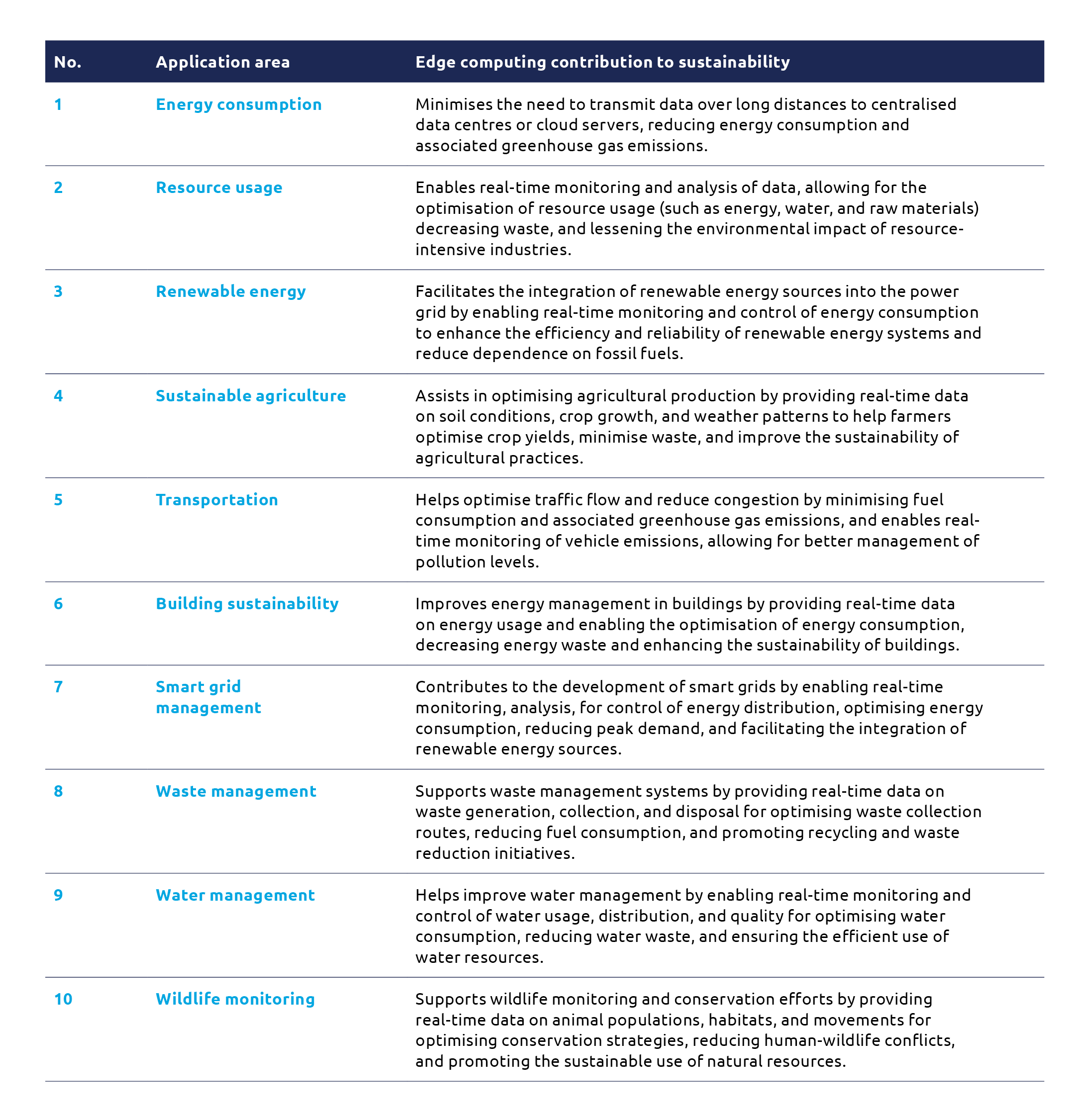
Table 1. Edge Computing Applications and Their Impact on Sustainability
Table 1 provides a clear and concise overview of the various application areas and how Edge computing contributes to sustainability in each of them. The use of Edge computing in green AI can contribute to a more sustainable future by reducing energy consumption, optimising resource usage, and promoting eco-friendly practices across different industries.
An essential aspect of green AI in Edge computing is its connection to green IoT (G-IoT)[1]-[2]. The concept of green IoT is defined as energy-efficient methods (for both hardware and software) employed by IoT technologies to either facilitate the reduction of the greenhouse effect in existing applications and services, or to minimise the greenhouse effect's impact on the IoT ecosystem itself[3]. Green IoT and Edge AI adoption supports digital circular economy concepts by organisations and society in two main ways. First, by incorporating an open green IoT architecture[4] where green IoT devices have circularity enabling features (e.g., end-to-end cybersecurity, privacy, interoperability, and energy harvesting capabilities). These devices can work in tandem with Edge AI systems to create a more sustainable and efficient ecosystem. Second, by having a network of Edge-AI green IoT connected devices that provides fast smart services and real-time valuable information to the different stakeholders (e.g., designers, end users, suppliers, manufacturers, and investors). Thus, supply chain visibility and transparency of the product, the production system, and the whole business is ensured. Moreover, stakeholders can rely on accurate, real-time information to make the right decisions at the right time to use resources effectively, to improve the efficiency of processes, and to reduce waste. Furthermore, asset monitoring and predictive maintenance can increase product lifetimes. Figure 1 provides an overall view of the main areas impacted by the combined use of green IoT and Edge-AI in the context of green AI[5].
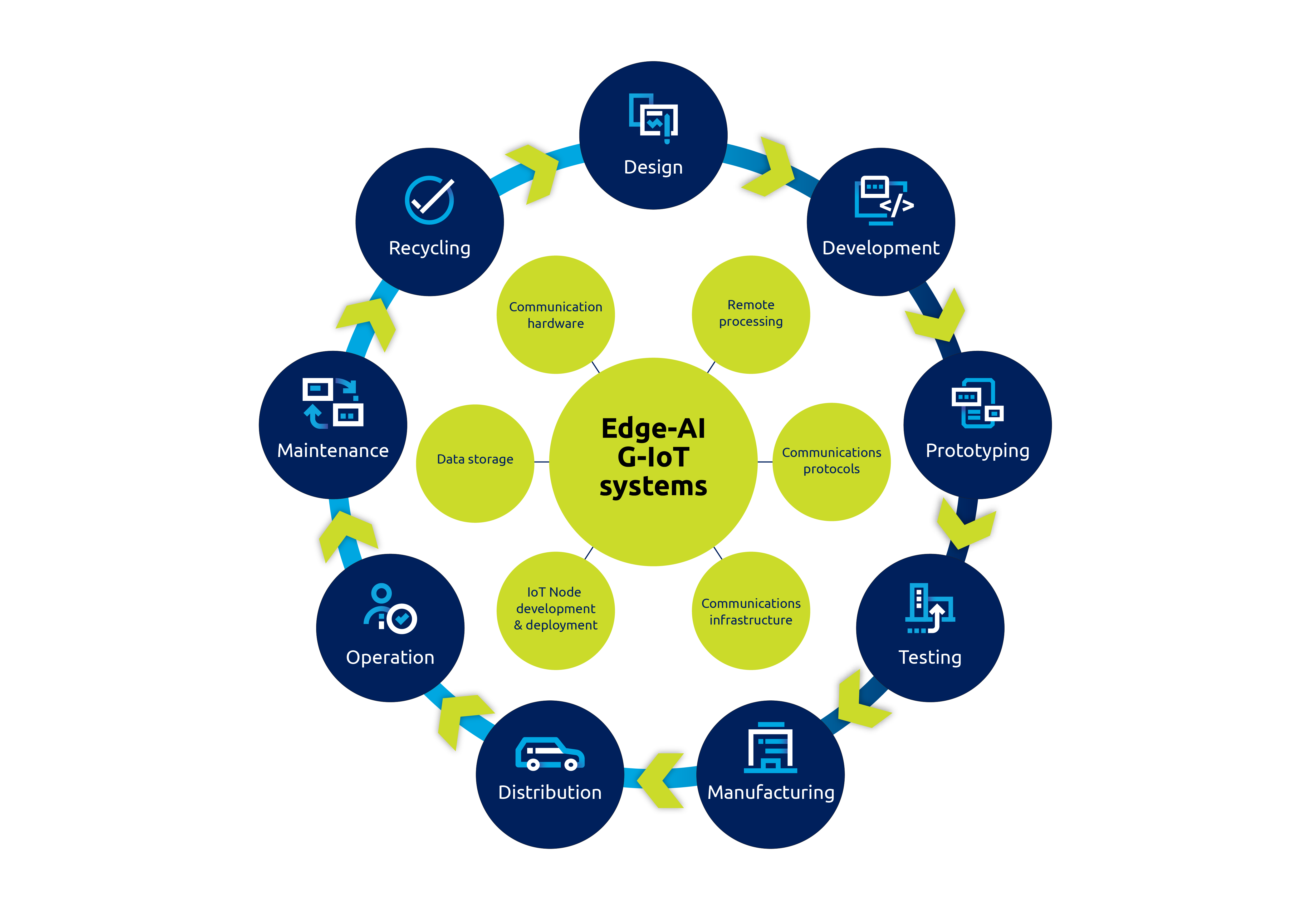
Figure 1. Edge-AI green IoT main areas and their digital circular life cycle5
Challenges and complications in implementing green AI in Edge computing
While Edge computing holds great potential for achieving green AI, there are several challenges and complications that need to be addressed to harness its full potential. In this section, we will discuss these challenges and explore the complexities involved in implementing green AI in Edge computing.
-
Energy challenges:
One of the primary challenges in Edge AI is managing power consumption and battery life constraints. Edge devices often have limited power resources, and optimising energy consumption is crucial for ensuring the sustainability of AI systems. Balancing energy efficiency with performance and accuracy is a critical aspect of green AI in Edge computing. This involves designing energy-aware algorithms and models that can adapt to available power resources and dynamically adjust performance to maintain energy efficiency. -
Limited resources:
Edge devices typically have limited computational resources, such as processing power, memory, and storage. Efficient management and allocation of resources, without compromising local intelligence, is essential for implementing green AI on Edge devices. This requires the development of lightweight AI models and algorithms that can efficiently utilise available resources while maintaining high performance and accuracy. Techniques such as model compression, pruning, and quantisation can help reduce the resource requirements of AI models to make them more suitable for deployment on Edge devices. -
Performance and accuracy:
Ensuring that Edge computing solutions maintain performance and accuracy while prioritising energy efficiency can be challenging. Developing energy-efficient algorithms and models that provide optimal performance without sacrificing sustainability goals is crucial for green AI success. This may involve exploring novel techniques, such as federated learning and distributed AI, which can help optimise AI performance on Edge devices while minimising energy consumption. These approaches can enable Edge devices to collaboratively learn and share knowledge, reducing the need for resource-intensive centralised data centres and promoting energy efficiency. -
Collaboration and integration:
The need for collaboration between hardware and software developers to optimise energy consumption in Edge devices is another challenge. Achieving green AI in Edge computing requires a coordinated effort between AI researchers, hardware manufacturers, and software developers to create sustainable AI solutions tailored for Edge computing and localised intelligence. This collaboration can lead to the development of energy-efficient hardware and software solutions that optimise energy consumption in Edge devices without compromising performance and accuracy. For example, hardware manufacturers can develop low-power processors and memory specifically designed for green AI applications, while software developers can create energy-aware algorithms and models that can efficiently utilise these hardware resources. -
Scalability and adaptability:
Edge computing solutions for green AI must be scalable and adaptable to accommodate the growing number of AI applications and the increasing complexity of AI systems. Developing scalable and adaptable solutions that can handle the increasing demands of AI applications while maintaining energy efficiency is a significant challenge. This may involve designing modular and flexible AI architectures that can easily scale and adapt to different Edge devices and application requirements. Additionally, edge computing solutions should be capable of handling the dynamic nature of AI workloads, which may require real-time adaptation and reconfiguration to maintain energy efficiency and performance.
Solutions and strategies for green AI in Edge computing
To overcome the challenges and complications in implementing green AI in Edge computing, a number of solutions and strategies can be employed. In this section, we will discuss these potential solutions and explore how they can contribute to the successful implementation of green AI in Edge computing.
-
Energy-efficient algorithms and models:
Developing energy-efficient algorithms and models for Edge AI is crucial for leveraging localised intelligence for sustainability. Researchers can explore novel techniques, such as model compression, pruning, and quantisation, to optimise AI performance on Edge devices while minimising energy consumption. Additionally, adaptive algorithms that can dynamically adjust their performance based on available power resources can help balance energy efficiency with performance and accuracy. -
Hardware optimisations:
Implementing hardware optimisations for energy conservation in Edge devices, such as low power processors, memory, and storage, specifically designed for green AI applications, can significantly reduce power consumption. Additionally, energy harvesting technologies can be integrated into Edge devices to extend battery life and improve overall energy efficiency. These technologies can convert ambient energy sources, such as solar, thermal, or kinetic energy into electrical power to provide a sustainable and continuous power supply for Edge devices. -
Collaborative efforts:
Encouraging collaboration between AI researchers, hardware manufacturers, and software developers is essential for creating sustainable AI solutions tailored for Edge computing and localised intelligence. Joint efforts can lead to the development of energy-efficient hardware and software solutions that optimise energy consumption in Edge devices without compromising performance and accuracy. Establishing interdisciplinary teams and fostering open communication channels can help facilitate the exchange of ideas and the development of innovative solutions for green AI in Edge computing. -
Raising awareness:
Raising awareness about the importance of green AI and the potential of Edge computing for achieving sustainability goals through localised intelligence is crucial. Promoting the benefits of green AI and Edge computing to stakeholders may encourage them to invest in research and development efforts to create more sustainable AI systems. This can be achieved through educational initiatives, conferences, workshops, and publications that highlight the significance of green AI and the role of Edge computing in achieving sustainability goals. -
Novel techniques and approaches:
Exploring novel techniques, such as federated learning and distributed AI, can help optimise AI performance on Edge devices while minimising energy consumption. These approaches can enable Edge devices to collaboratively learn and share knowledge and reduce the need for resource-intensive centralised data centres. By investigating and adopting innovative techniques, researchers and developers can contribute to the advancement of green AI in Edge computing and help overcome the challenges associated with limited resources, performance, and accuracy
Conclusion
Green AI in Edge computing has the potential to revolutionise the way AI systems are designed, implemented, and deployed and ensure that the benefits of AI can be harnessed in an environmentally responsible manner. Leveraging localised intelligence and edge computing with green AI will contribute to a more sustainable future by reducing energy consumption, optimising resource usage, and promoting eco-friendly practices across different industries.
The integration of green AI and Edge computing can lead to significant advancements in various application areas, such as energy management, transportation, agriculture, and smart cities. By adopting energy-efficient algorithms, hardware optimisations, and novel techniques, researchers and developers can create AI systems that are not only powerful and accurate but also environmentally sustainable. This shift towards sustainable AI systems will have far-reaching implications for the global economy, the environment, and society.
Furthermore, fostering collaboration between AI researchers, hardware manufacturers, and software developers is essential for driving innovation in green AI and Edge computing. By working together, these stakeholders can develop comprehensive solutions that address the challenges and complexities associated with implementing green AI in Edge computing. This collaborative approach can accelerate the development and deployment of sustainable AI systems and ultimately contribute to a greener and more energy-efficient future.
Raising awareness about the importance of green AI, and the potential of Edge computing in achieving sustainability goals, is also crucial. By promoting the benefits of green AI and Edge computing, stakeholders may be encouraged to invest in research and development efforts to create more sustainable AI systems. This can be achieved through educational initiatives, conferences, workshops, and publications that highlight the significance of green AI and the role of Edge computing in achieving sustainability goals.
In conclusion, the successful implementation of green AI in Edge computing can pave the way for a more sustainable and energy-efficient AI landscape. By emphasising the critical role of Edge computing in green AI success, we underline the significance of sustainable and energy-efficient AI systems that leverage localised intelligence for a more sustainable future. As AI continues to play an increasingly prominent role in our daily lives, it is imperative that we prioritise the development and deployment of environmentally responsible AI systems to ensure a greener and more sustainable future for all.
Reference
[1] Arshad, R.; Zahoor, S.; Shah, M.A.; Wahid, A.; Yu, H. Green IoT: An Investigation on Energy Saving Practices for 2020 and Beyond. IEEE Access 2017, 5, 15667–15681.
[2] Albreem, M.A.; Sheikh, A.M.; Alsharif, M.H.; Jusoh, M.; Mohd Yasin, M.N. Green Internet of Things (GIoT): Applications, Practices, Awareness, and Challenges. IEEE Access 2021, 9, 38833–38858.
[3] Zhu, C.; Leung, V.C.M.; Shu, L.; Ngai, E.C.-H. Green Internet of Things for Smart World. IEEE Access 2015, 3, 2151–2162.
[4] Askoxylakis, I. A Framework for Pairing Circular Economy and the Internet of Things. In Proceedings of the 2018 IEEE International Conference on Communications (ICC), Kansas City, MO, USA, 20–24 May 2018; pp. 1–6.
[5] Fraga-Lamas, P.; Lopes, S.I.; Fernández-Caramés, T.M. Green IoT and Edge AI as Key Technological Enablers for a Sustainable Digital Transition towards a Smart Circular Economy: An Industry 5.0 Use Case. Sensors 2021, 21, 5745. https://doi.org/10.3390/s21175745