Published: May 12, 2025
Metaverse foundations and principles
Asking the Right Questions (ARQ) about the Metaverse
Executive summary
In the age of hype surrounding the Metaverse, NCS presents an exploration of its potential and practical implications as part of our ARQ Series. The Metaverse, perceived as the next evolution of the Internet, holds the promise to reshape how we live, work, and interact. NCS believes that significant advancements in technology, such as 3D modelling, blockchain, Artificial Intelligence (AI), and 5G, will unlock the true potential of the Metaverse. While challenges related to security and privacy persist, companies are actively pursuing business-driven use cases within this space. NCS introduces eight crucial questions, as guiding principles, that enterprises aiming to derive maximum value from the Metaverse should ask.
The momentum behind Metaverse technologies remains strong, fuelled by interoperability standards, technological advancements, and the commercialisation of immersive reality wearables. Established technology providers such as Amazon Web Services (AWS) are contributing with cloud-based spatial simulations. The Metaverse Standards Forum, comprising major technology industry players including Meta, Microsoft, and Huawei, aims to formulate global interoperability standards. NCS identifies four key domains (Consumer, Training, Enterprise, and Industrial) where businesses should target their Metaverse initiatives. Young people, including a significant number below the age of thirteen, are increasingly engaging in immersive experiences (on platforms such as Roblox) and reshaping digital engagement norms.
NCS has worked with multiple clients on innovative Metaverse projects, including the creation of virtual transportation stations for accessibility testing for an Australian transport authority, and the creation of an immersive artistic environment for a national art gallery. Businesses are encouraged to repurpose existing resources and to gradually adopt the Metaverse. While Metaverse security remains a concern, stateless transactions and persistent spaces offer ways to mitigate risks. The emergence of the Darkverse and unique attack vectors necessitate comprehensive security measures.
NCS emphasises that Metaverse success should be measured by aligning key performance indicators with business goals across various deployment complexities. The potential for profit improvement and operational efficiencies is vast, as even simple deployments can yield substantial benefits. Businesses are urged to identify and measure tangible business outcomes from their Metaverse projects, and to adopt a balanced approach that encompasses user experience, security, and privacy. The Metaverse can have a transformative impact, and a thoughtful approach will determine its successful integration into a company’s digital landscape.
Introduction
NCS believes that the Metaverse is the next generation of the Internet. It represents a new paradigm of interconnectivity, where multiple virtual worlds exist. As such, the potential of the Metaverse to revolutionise the way we live, work, and play is tremendous. According to McKinsey’s 2022 Value creation in the Metaverse report, the Metaverse is expected to unlock an estimated USD 5 trillion in value globally by 2030.
“The potential of Metaverse technology is immense and not to be underestimated. While the concept has existed since the early 90s, it is only with recent advancements in areas such as 3D modelling, blockchain, AI, and 5G that the full potential of the Metaverse has been unlocked. Despite ongoing concerns around security and privacy, companies are not deterred from exploring business-driven use cases for the Metaverse. While not all business Metaverse initiatives will be successful, those that are will offer tremendous opportunities for sustainability and growth. Furthermore, business applications of Metaverse technology will play an increasingly significant role in managing complex operations, making it a key area for businesses to focus on.” – Lyndy Ng, Xperience Works Practice Lead
With this perspective in mind, NCS outlines a set of seven pivotal questions to serve as guiding beacons for enterprises. These queries will aid in helping businesses to realise the most value from the Metaverse.
Is it still worth paying attention to the Metaverse?
NCS believes that there is strong momentum in underlying Metaverse technologies.
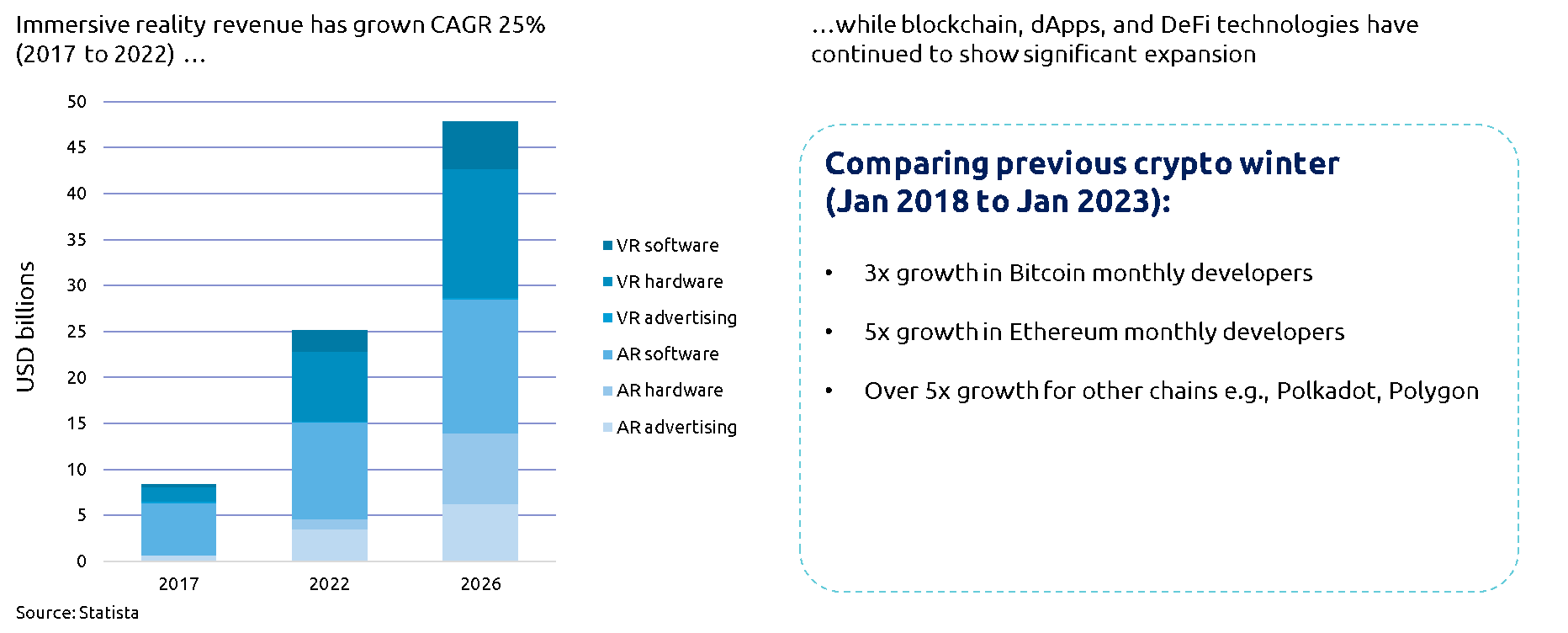
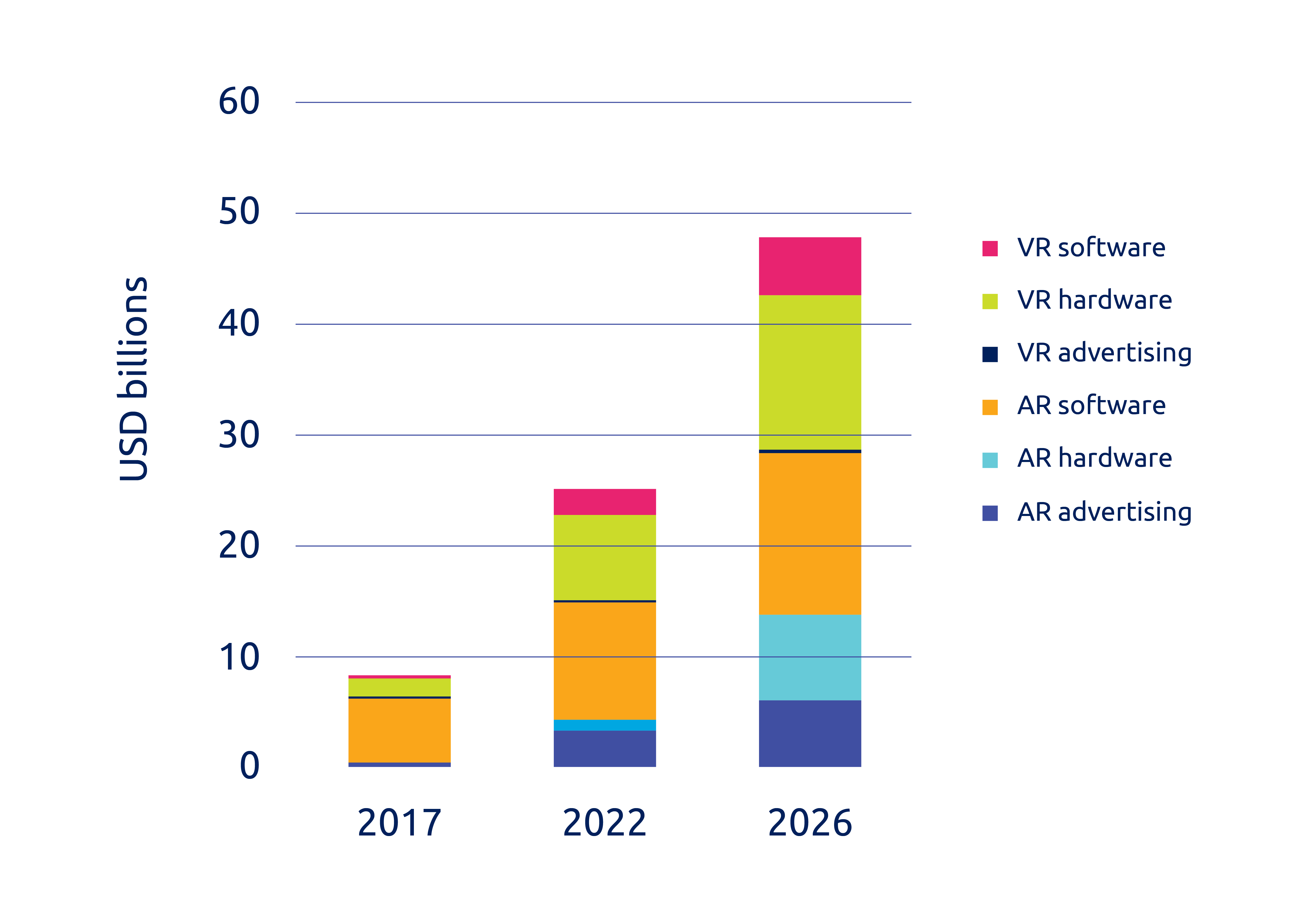
Figure 1: Immersive reality market projected to reach over USD 45 billion by 2026. Source: NCS, Statista
Interoperability standards, technological advancements, and the commercialisation of immersive reality wearables are driving increased relevance and adoption of the Metaverse. For example:
Advancements by prominent hyperscale technology providers such as Amazon Web Services (AWS), which introduced the AWS SimSpace Weaver in November 2022, facilitate extensive cloud-based spatial simulations.
The Metaverse Standards Forum, established in June 2022 to formulate interoperability standards, currently boasts participation from over 2,400 organisations, including notable companies such as Meta, Microsoft, Huawei, China Telecom, Nvidia, and Qualcomm.
The introduction of Apple Vision Pro has invigorated both enterprise and developer enthusiasm for spatial interactions.
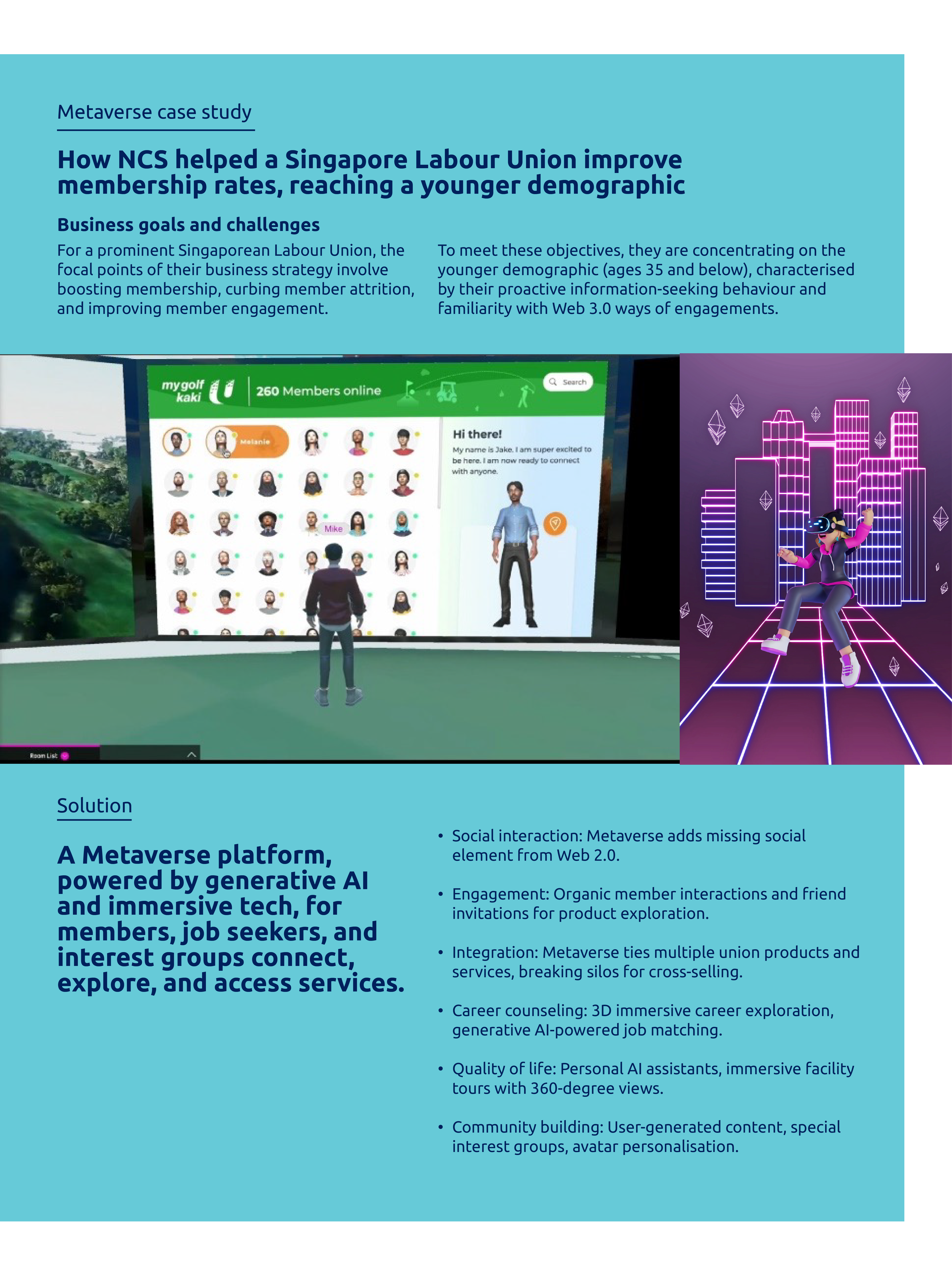
Generative AI (Gen AI) is playing a synergistic role by enabling the creation of virtual interactive avatars and the dynamic generation of scenarios. (NCS has worked with a large Singapore labour union to deploy virtual avatars as career counsellors using Gen AI on a Metaverse platform).
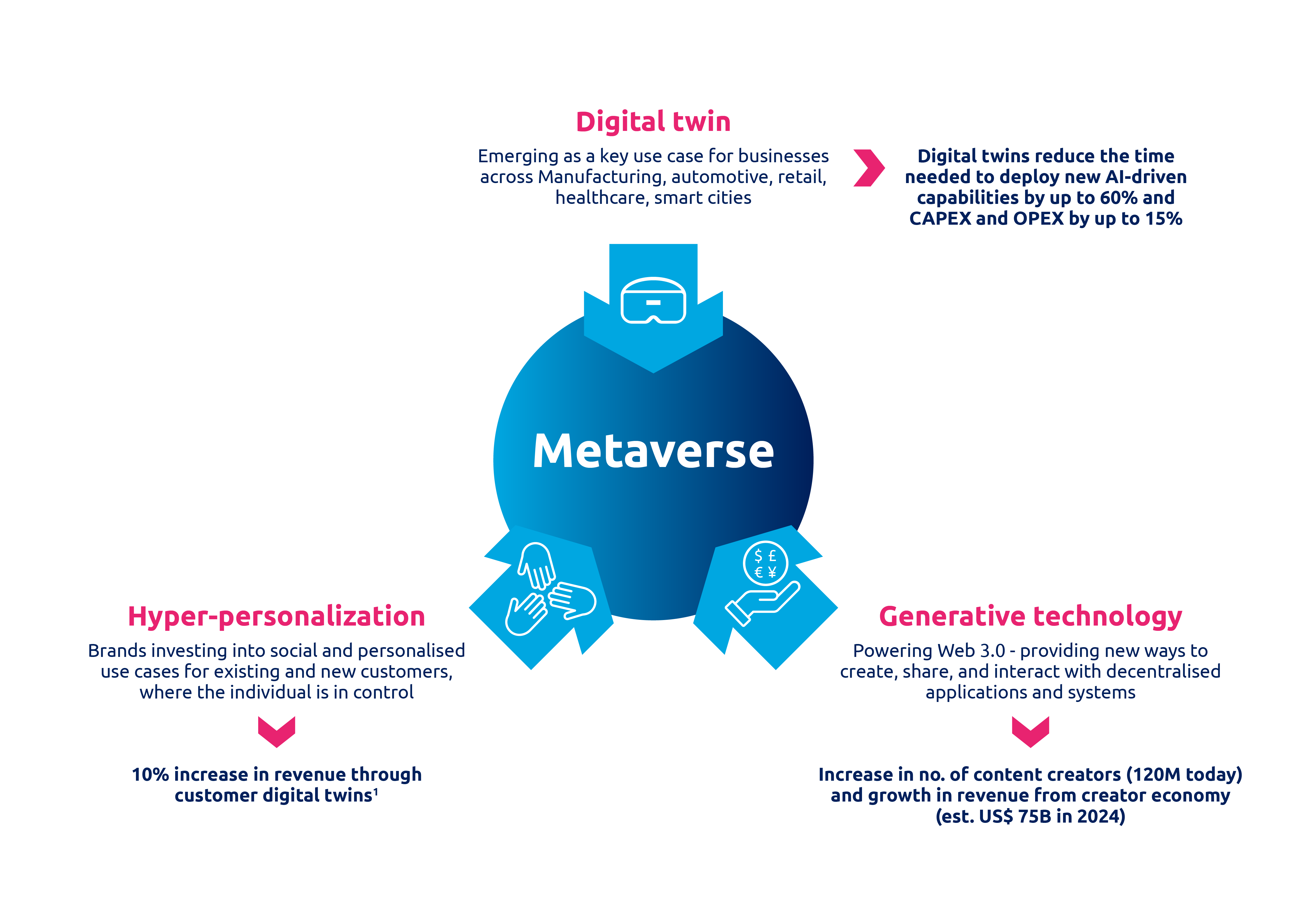
Figure 2: The three driving forces of the Metaverse
Business interest in the Metaverse is steadily growing and first movers around the globe are laying the groundwork to cater to anticipated future demand from consumers.
Which use cases for the Metaverse are most relevant to my business?
NCS highlights four key Metaverse domains that businesses should consider. A comprehensive study of existing Metaverse-related case studies and the Return on Investment (ROI) for each use case was conducted by NCS Tesseract to determine the key value propositions and ROI metrics.
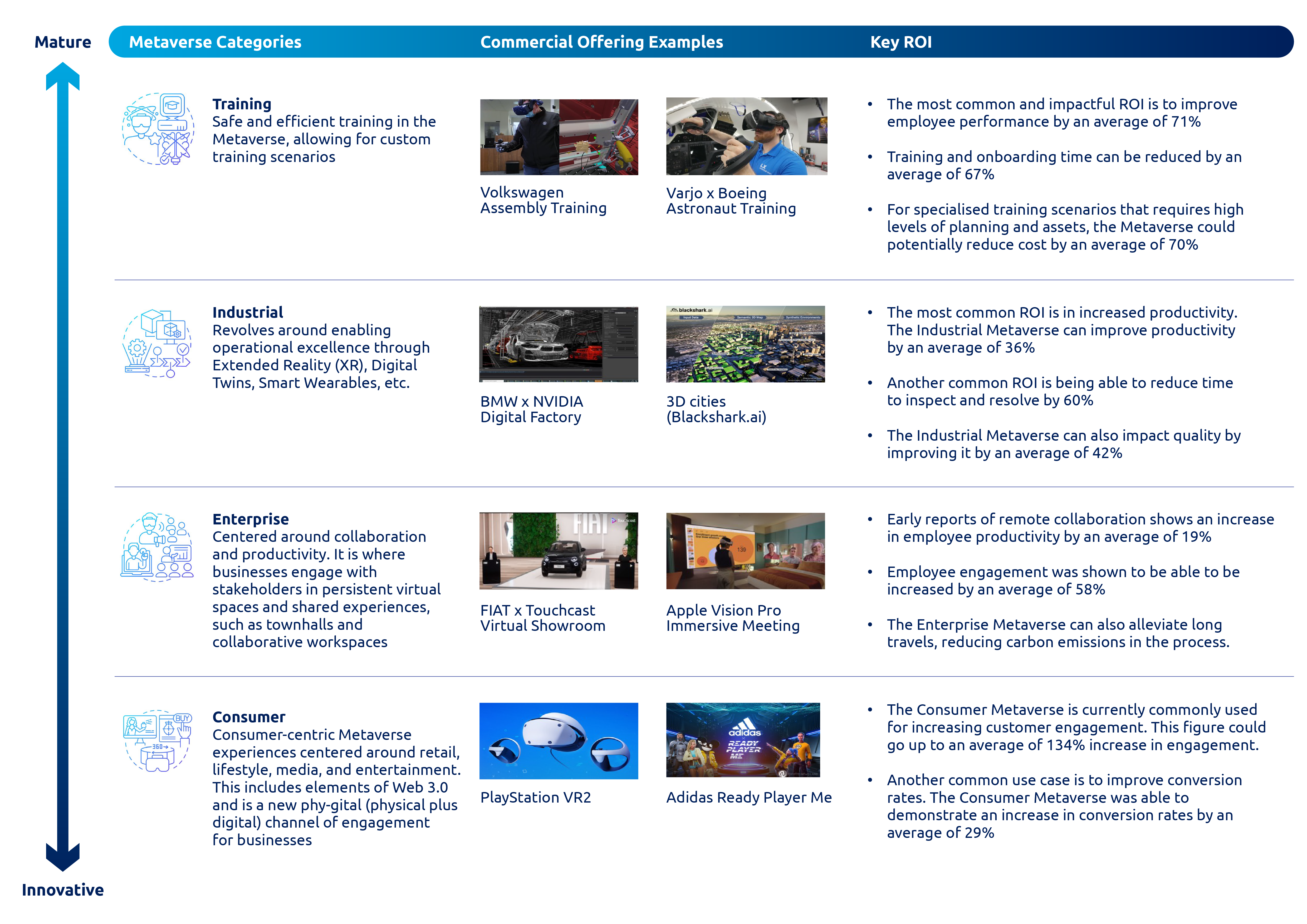
Figure 3: Key Metaverse use cases and ROI. Source: Tesseract
Who are the prospective customers for Metaverse offerings?
A key question for businesses is: who are the right audiences for the Metaverse?
Metaverse users encompass a diverse range of individuals and groups, and while the specific demographics may vary based on platforms and experiences, businesses can generally target the following audiences:
- Consumers: Virtual experiences in the Metaverse are becoming more prevalent, offering unique engagement opportunities. Brands can attract consumers looking for immersive interactions and entertainment. Tech giants such as Microsoft and Apple and brands including Nike and Coca-Cola are already leveraging the Metaverse to connect with their audiences.
- Professionals: The Metaverse also serves as a platform for networking, business events, and training. Professionals seeking innovative ways to collaborate, learn, and showcase their expertise can benefit from Metaverse engagement.
- Gamers and entertainment enthusiasts: The gaming industry has been an early adopter of the Metaverse concept, attracting gamers and entertainment enthusiasts. Brands can tap into this segment by providing in-game experiences, events, and products.
- Innovators and developers: Developers and creators are fundamental to the Metaverse's growth. Businesses catering to this audience with tools, platforms, and resources can foster the Metaverse’s expansion and innovation.
- Industrial and skilled workers: Employees working in harsh and dangerous industrial environments and in the Architecture, Engineering, and Construction (AEC) business segment will be key beneficiaries of the Metaverse. Businesses can improve safety and training effectiveness, and potentially enable cyber-physical augmentation whereby users can affect the real world through a virtual interface.
In essence, the users of the Metaverse span a broad spectrum of interests ranging from consumers seeking entertainment to professionals exploring networking and collaboration opportunities. To effectively engage these audiences, businesses must tailor their Metaverse strategies to align with the unique expectations and needs of each group.
Embracing shifting trends to reach new audiences
The ability to adapt to changing consumer behaviour is paramount for businesses that seek to avoid being disintermediated. Tesseract has found that young people are flocking to immersive experiences. The growth of platforms such Roblox, which saw its monthly active user base increase from nine million in 2016 to 200 million in 2023, underscores this fact. Supporting the fact that the digital demographic is changing is Tesseract’s finding that more than half of current Metaverse users are aged thirteen or younger.
What experiences should be new or recreated for the Metaverse?
Not all Metaverse experiences are created equally. The right Metaverse experiences must be clearly identified. The following experiences offer great opportunity for creation or re-creation in the Metaverse:
- Immersive work environments: Reimagine work environments by creating virtual offices, collaborative spaces, and tools that enhance productivity and teamwork.
- Entertainment and gaming: Develop interactive and immersive games, concerts, and events that allow users to engage with their favourite content in unprecedented ways.
- Social interaction: Facilitate meaningful connections through virtual social platforms that enable people to socialise, attend events, and share experiences.
- Education and training: Offer interactive educational experiences, training simulations, and skill-building opportunities within a virtual setting.
- Healthcare and therapy: Provide virtual healthcare services, therapy sessions, and wellness activities that leverage the unique capabilities of the Metaverse.
- Art and creativity: Enable artists to create and showcase their work in new mediums that foster innovative forms of expression.
- Retail and commerce: Build immersive shopping experiences, allowing users to explore virtual stores and products before making purchases.
- Travel and exploration: Allow users to explore virtual destinations, historical landmarks, and fictional worlds to open new areas for exploration.
NCS reimagines experiences through Innovative Metaverse simulations
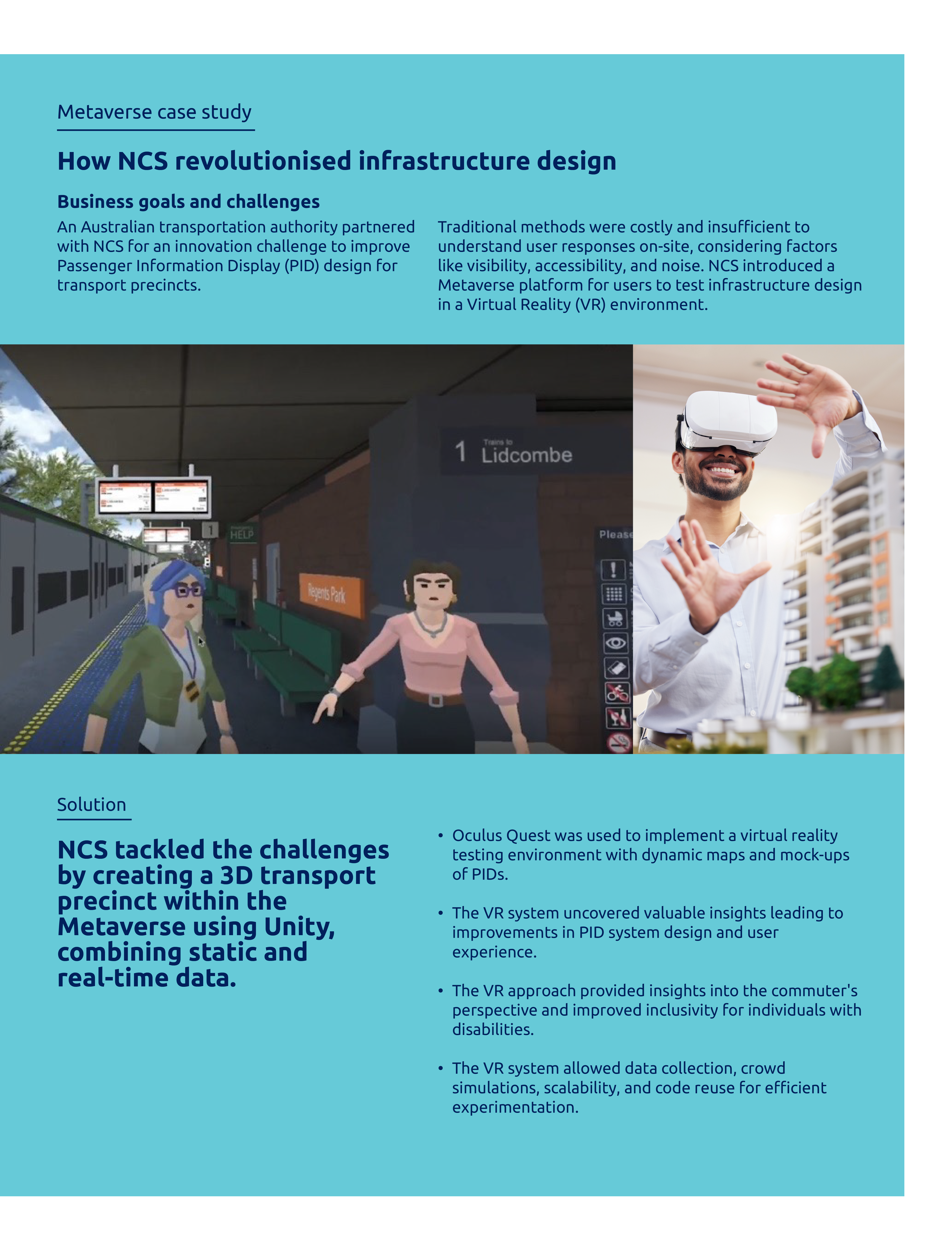
NCS collaborated with an Australian transport authority to reimagine virtual bus and train stations within the Metaverse. Using Virtual Reality (VR), individuals access a simulated environment, and the transport authority assesses user interactions with Passenger Information Display Systems (PIDS) and navigation throughout the environment. The VR settings allow for adjustments in user height to mirror the experience of individuals with disabilities. Additionally, the environment's lighting can be manipulated so that observations can be made about individual responses to PIDs in darkness. Moreover, the inclusion of Non-Player Characters (NPCs) to simulate fellow commuters provides insight into commuter situational reactions.
In an example of using innovative experiences to reach new audiences, NCS partnered with the National Gallery of Singapore to revolutionise artistic involvement through the Metaverse. The core challenge was to effectively captivate and engage individuals who do not typically identify as art enthusiasts. These individuals often perceive art as daunting, or distant, and struggle to navigate gallery spaces. NCS took a three-pronged approach that focused on entertaining, educating, and engaging the target audience. Fusing 3D audio/visual components with a dynamic mixed reality Metaverse experience, NCS enabled users to delve into the profound histories and inspiring narratives behind each work of art.
A trial centred around Raden Saleh's artwork, "Boschbrand", serves as an example of how the Metaverse can be used to enhance engagement. Using Augmented Reality technology (AR), users are immersed in a narrated video of the artwork where elements of the piece spring to life, exhibit movement, and even venture beyond the confines of the artwork itself to interact with the user's surroundings.
How can existing technologies enhance the Metaverse?
Businesses should contemplate repurposing existing resources for a gradual introduction of their Metaverse strategy. These resources can encompass various elements like 3D models, animations, 2D graphics, as well as ancillary systems such as Internet of Things (IoT) platforms and Geographical Information Systems (GIS).
Crafting Metaverse environments does not necessarily require substantial investments in external Metaverse service providers or platforms. Instead, companies can leverage low-code Metaverse development platforms, such as COMICOMI, which permit the reuse of pre-existing business assets. Alternatively, they can opt for platforms offering a repository of curated assets for swift deployment. Numerous avenues exist for accessing the Metaverse, including AR, VR, PCs, mobile devices, and image-tracking apparatuses for generating holographic avatars. AR serves as a valuable tool for navigation and can seamlessly integrate into an employee's daily tasks. Conversely, VR is better suited for simulations and training purposes. PCs or personal/business-grade mobile devices represent the most straightforward entry points.
However, it is vital for businesses to comprehend that the foundational technological layer of the Metaverse is essentially multi-platform. This includes platforms for managing 3D assets and content, payment systems, identity management, and backend development for the Metaverse, among other platforms. Moreover, ensuring compute and networking resources across on-premises and cloud infrastructure, and wireless configurations on end-user devices requires meticulous provisioning and management. Thus, identifying an appropriate integration partner with suitable alliances or solutions capability to provision the foundational Metaverse technology layer is of utmost importance.
How can one get started on the Metaverse journey?
Less intricate Metaverse solution deployments generally don't demand extensive modelling and have minimal data prerequisites. As such, there is no necessity to acquire or provision high-end GPUs or robust processing capabilities and storage solutions from external cloud providers to facilitate the setup. Moreover, these solutions exhibit moderate levels of interaction complexity, rely on straightforward programmed logic, and do not necessarily mandate data integration.
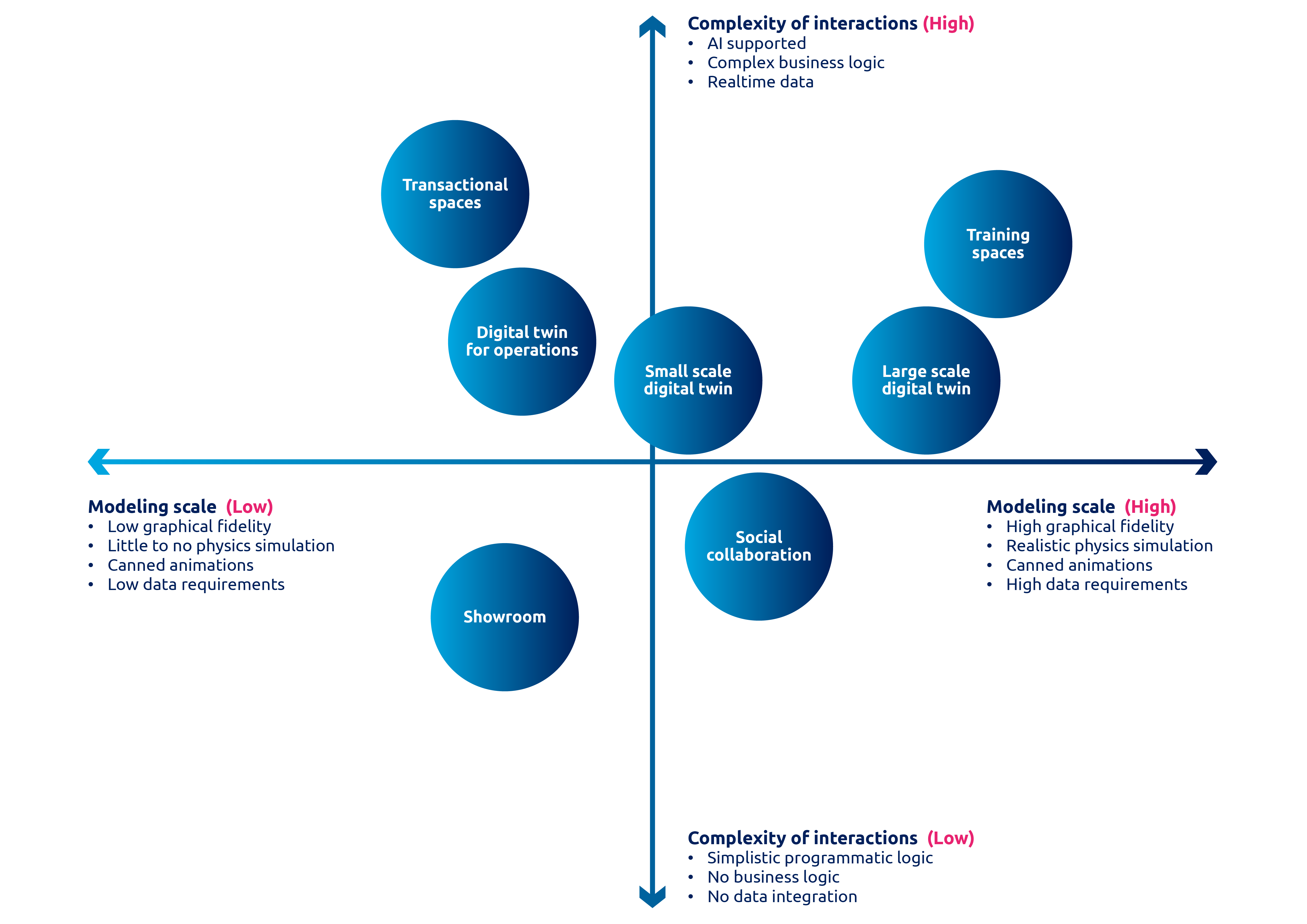
Figure 4: Metaverse Complexity Matrix. Source: NCS Xperience Works
As businesses progress along the complexity spectrum and expand their scope, the applications they deploy can adopt a more real-time nature and integrate with a greater number of components such as IoT sensors embedded in equipment and personal wearables.
This data stream can then be visualised in greater detail in a 3D Metaverse space to allow operations managers to have better situational awareness without having to be physically present.
Furthermore, the pursuit of more precise, physics-incorporated, and authentic simulations would elevate the scale of modelling, subsequently demanding heightened data prerequisites and enhance graphical realism. At the pinnacle of complexity, there exist transactional Metaverse archetypes which facilitate secure transactions and communication within a multiplayer environment.
NCS strategically enables gradual adoption of the Metaverse for a client
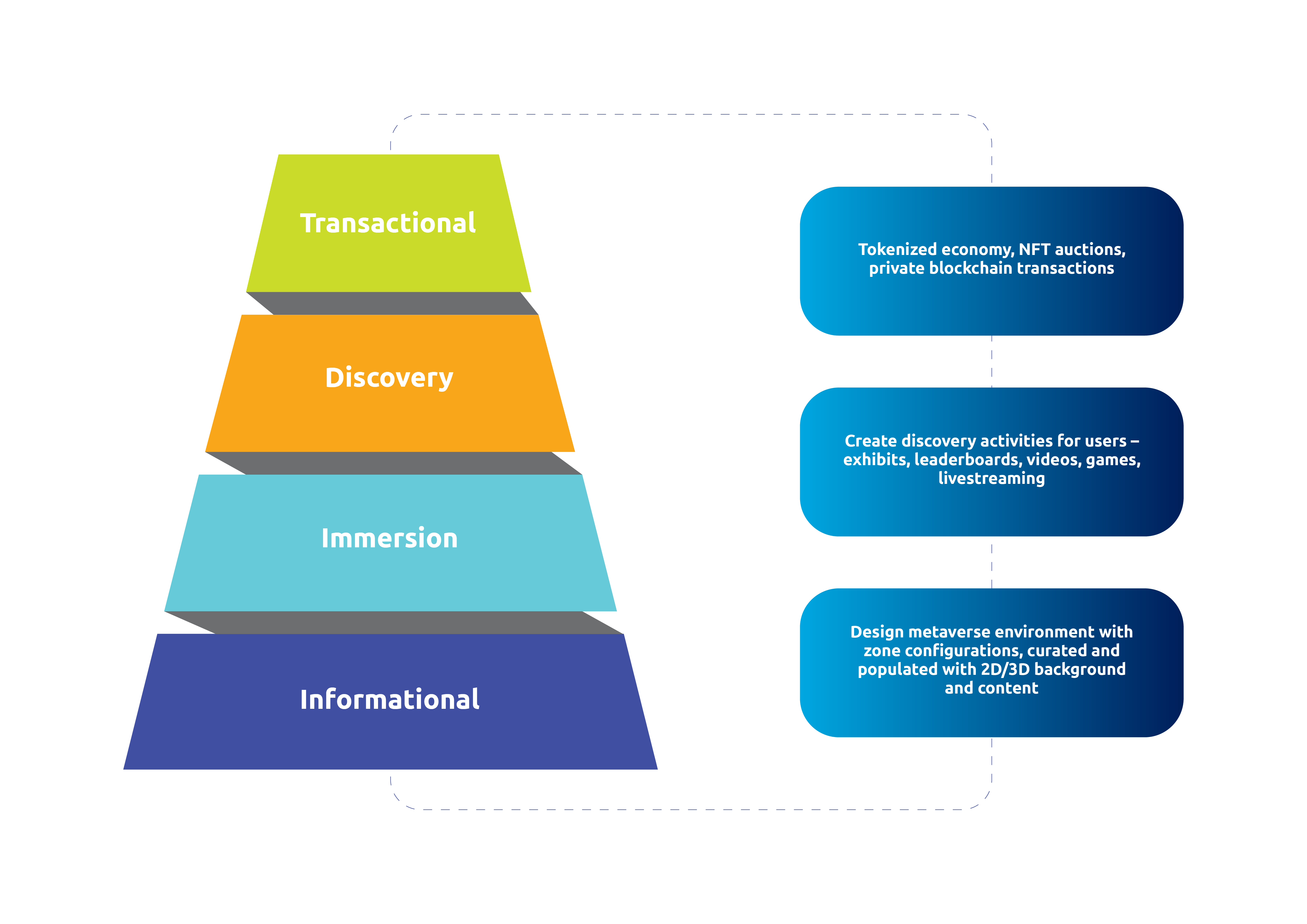
Through a collaborative effort, NCS orchestrated the progressive establishment of a Metaverse platform for a leading financial services provider in Asia. The journey began with a foundational, simplistic, archetype, situated at the base level, that was primarily designed for information dissemination.
No one has yet taken a ‘big bang’ approach when implementing Metaverse applications, especially in the enterprise space. Through a series of iterative events, NCS helped the client transition up the value chain from simple informational transactions, like town hall meetings, to the point where secured transactions like NFT trading were enabled in the Metaverse.
A notable outcome of the transactional stage was the ability of users to engage in a tokenised economy where users earned more than 1 million virtual coins that were subsequently converted into charitable contributions.
How can one mitigate security risks and enable secure commercial transactions?
How can security risks be addressed, and secure commercial transactions be enabled in the Metaverse? Stateless transactions can be implemented within the Metaverse, or traditional backend transaction systems can be utilised. While regulations for financial transactions within the Metaverse have not yet been fully established, businesses should not be discouraged from introducing payment solutions and transactional spaces in this environment. One way to overcome the absence of regulations is to initially avoid integrating payment solutions into Metaverse platforms. Instead, let the existing payment system handle transactions, while users engage in activities within the Metaverse.
In terms of security, persistent spaces in the Metaverse do not compromise safety since they are stateless. This means they do not retain information about their state from one runtime to the next. Employing a stateless approach enables businesses to conduct transactions or private meetings in the Metaverse, with a continuous environment, while sensitive details such as transaction records and passwords remain temporary. Additionally, a variety of security layers can be implemented across different points in the Metaverse, spanning from a device's hardware layer to the Metaverse platform and third-party applications.
New threats arise from the Metaverse
Within the ever-expanding domain of the Metaverse, several distinct attack vectors have emerged that present notable security and privacy challenges. Foremost, cyber-physical systems have become vulnerable targets in this virtual realm. The integration of physical devices with interconnected systems introduces opportunities for malicious actors to exploit vulnerabilities and cause real-world damage. Furthermore, AR and VR tools offer fresh avenues for attacks. Given their immersive nature, these technologies can be manipulated to deceive users or to compromise their personal information. NFTs and blockchain, which have gained substantial popularity, are also susceptible to threats. The decentralised nature of blockchain technology makes it an attractive target for hackers seeking financial gain or disruption. As the Metaverse continues to rapidly evolve, addressing these unique attack vectors becomes imperative.
The rise of the Metaverse introduces a new realm known as the Darkverse that is akin to the dark web in traditional cyberspace. This concealed underbelly of the Metaverse presents numerous security threats and challenges that users must be conscious of. The Darkverse serves as a breeding ground for illicit activities including the manipulation of cyber-physical systems, exploitation of AR and VR tools, and fraudulent practices involving NFTs and blockchain technology.
NCS’s response to maintaining security in the Metaverse
NCS recognises the swiftly evolving nature of the Metaverse, and our viewpoint is shaped by the need to find equilibrium among user experience, security, and privacy. As users immerse themselves in this virtual realm, their interactions become more complex, necessitating robust measures to protect personal data and ensure a secure atmosphere. While user experience is central to the Metaverse's allure, it should not come at the expense of security or privacy.
Striking a balance between user experience and security involves implementing fundamental cyber hygiene practices, such as authentication protocols that verify user identities, without hindering the immersive experience. Access control mechanisms must be put in place to regulate permission within the Metaverse, while maintaining user autonomy. Safeguarding sensitive data within the Metaverse is pivotal for upholding trust among users. The integration of encryption techniques and data protection frameworks into the infrastructure is vital to preventing unauthorised access or breaches. Concurrently, continuous security monitoring must be adopted to swiftly detect and respond to potential threats.
NCS believes in collaborative endeavours to both secure the Metaverse and preserve privacy. Given the diverse array of virtual experiences and interactions that occur within this immersive digital realm, protecting sensitive information and averting cyber threats becomes a collective duty. Securing the Metaverse necessitates a multifaceted approach that calls for collaboration among diverse stakeholders including technology firms, developers, users, and regulatory bodies.
How should businesses measure success?
How should the measurement of success be approached? Key performance indicators (KPIs) should be established that align with business goals including user engagement, client contentment, and operational efficiency. While transactional capability in the Metaverse may be complex to deploy, it is not the only archetype that can help drive profits for businesses. Metaverse deployments with much lower levels of complexity, such as for showrooms or social collaboration, can deliver immediate efficiency gains and positive business outcomes. NCS has found that some Metaverse-related social collaboration use cases for the real estate industry have helped employees work faster and have increased collaboration among remote employees by 30%.
Businesses do not need to deploy all archetypes or a Metaverse transaction level of complexity to see improvement in the bottom line. Solutions such as AI can be applied across the entire spectrum of Metaverse archetypes to improve profit margins. For example, a retailer might create special interest groups in the Metaverse to understand its customers better. Secure methods can then be used to track online behaviour and interactions in these Metaverse groups, which can present upsell opportunities. Businesses must thus be observant and hawkish in identifying and measuring business outcomes from their Metaverse deployments.
|
About Tesseract: Tesseract is NCS’s Innovation Center and is focused on helping clients use technology to address market challenges and opportunities. Our extensive team of researchers and practitioners helps clients to experience cutting-edge technology, in an immersive manner, at our 4,500 square foot facility. Through Design Thinking workshops, our innovation team leads clients through a proof of value process for the evaluation of leading technologies and the identification of market gaps. Tesseract has extensive APAC-focused research capability to assist clients with white papers and points-of-view on the impact of technology to specific industries and business functions, as well as consultative capabilities to identify promising innovative start-up companies globally. |